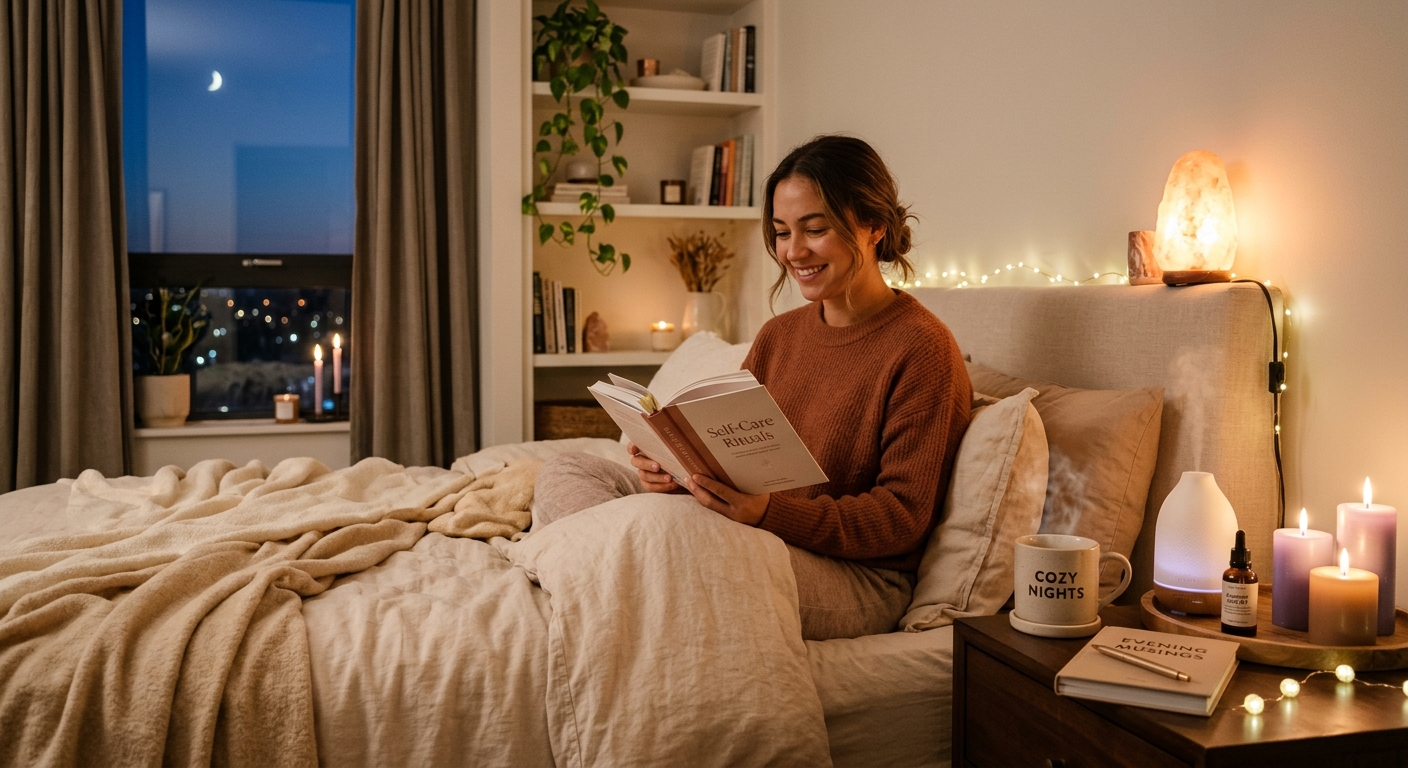
How to Create an Evening Self-Care Routine You Actually Look Forward To
Your evening finally belongs to you, and somehow it starts feeling like another assignment. There is skincare to finish, a journal to fill, a room to tidy, and a bedtime you are already missing. What was meant to feel comforting has become one more thing to get right. An evening self-care routine can be much simpler. It can be a small pocket of personal downtime that asks very little of you and gives you something pleasant to anticipate.
Your Evening, With Less Pressure
- Choose activities you enjoy, even when they serve no practical purpose.
- Use one familiar moment as your cue to begin.
- Match your routine to the energy you actually have.
- Keep screen time optional and easy to finish.
- Make a tiny version for evenings that get away from you.
Start With What You Want Your Evening to Feel Like
Before choosing activities, think about what feels missing from your day. Perhaps you spend hours answering questions and want a little quiet. Perhaps you work alone and would enjoy hearing a familiar voice. You might need movement after sitting, or permission to sit after being on your feet.
Give that need a plain name. Quiet. Comfort. Play. Space. Your answer can guide the evening without becoming a goal you have to achieve.
If you want comfort, putting on soft pajamas and rereading a favorite chapter might suit you. If you want play, a puzzle or a few minutes of drawing could sound more appealing. A long skincare sequence will have little appeal if what you really want is to take your makeup off and stop looking in the mirror.
Ask yourself what you would choose if nobody could see it. That question helps separate personal pleasure from the routines that look attractive in someone else’s photographs.
Give Downtime a Small, Recognizable Beginning
An evening routine does not need a strict starting time. A familiar cue can be easier to work with, especially if your schedule changes. You might begin after putting your dinner plate away, changing out of work clothes, or finishing the last household task you have agreed to do.
Choose a cue that already happens. There is no need to create an elaborate opening ceremony. Turning on a reading lamp and placing your phone out of reach may be enough to mark the shift.
Then make the first pleasant activity easy to reach. Keep your book beside your usual chair. Leave a notebook and pen in the same drawer. Put comfortable clothes somewhere accessible. These small arrangements save you from having to organize your downtime before you can enjoy it.
Your home can still look lived in. There can be dishes waiting and laundry on a chair. Personal time does not have to be a reward for finishing every chore.
Choose Gentle Movement That Feels Comfortable
Stretching can be part of the evening if you enjoy it. Keep the approach casual. You might slowly roll your shoulders, stretch your arms overhead, or move your ankles while sitting on the sofa. There is no requirement to follow a video or complete a sequence.
Pay attention to comfort rather than how far you can reach. Move gently, stay within an easy range, and leave out anything that hurts. A few relaxed movements can be the whole activity.
You can also choose a different kind of movement. Walk through your home while listening to one song. Step outside for a little fresh air if that is convenient. Change positions after spending much of the day in the same chair.
Some evenings, movement will have no appeal. You are allowed to choose a comfortable seat instead. The routine should have room for the body and energy you have that night.
Let Journaling Be Unfinished and Ordinary
A journal does not need to hold a thoughtful account of your life. It can hold a complaint about dinner, a sentence you overheard, or a reminder that you want more time alone this weekend. You do not have to turn every feeling into a lesson.
If a blank page feels demanding, try one of these starting points:
- What am I still thinking about from today?
- What felt pleasant, even briefly?
- What can wait until tomorrow?
- What would I enjoy having more room for?
Choose one prompt and write as little as you want. Three sentences count. An untidy paragraph counts. Leaving the page halfway through a thought is fine, too.
If writing feels too much like work, skip it. You might prefer sitting quietly with a drink or talking through your day with someone you trust. Journaling is an option for personal downtime, not a condition of having a proper routine.
Pick a Pleasant Activity Without Giving It a Job
This is the part of the evening you can choose simply because it sounds enjoyable. You do not need to learn something, create something useful, or become better at a hobby.
Readers who enjoy a little screen time might choose Pyramid Solitaire as an optional solo card game. Offline alternatives can fit the same part of the evening: dealing a physical deck of cards, working on a jigsaw puzzle, reading fiction, or sketching whatever happens to be nearby.
Think about the experience you want. A familiar activity may appeal when you have made enough decisions for one day. Something playful might feel good after an evening spent handling practical matters. You can choose differently tomorrow.
If you use a screen, give yourself an easy place to stop. That might be the end of a round or a short timer you choose in advance. If you keep going and no longer enjoy it, take that as useful information. You can adjust the activity or its place in your evening.
Offline hobbies can attract pressure, too. Knitting can become a deadline. Reading can turn into a page target. Let this particular stretch of time stay free of those demands.
Match the Routine to Tonight’s Energy
A routine becomes easier to return to when it allows for ordinary differences between evenings. You may have an hour on Sunday and ten minutes on Tuesday. Both can contain something that feels like your own time.
Keep a few choices available instead of insisting on the same sequence. The comparison below can help you choose without spending the evening planning it.
Evening Options for Different Energy Levels
| Tonight Feels | An Activity to Try | A Smaller Version |
|---|---|---|
| You want quiet | Read in a comfortable spot | Read one page |
| You want gentle movement | Try a few comfortable stretches | Slowly roll your shoulders |
| You want somewhere to put your thoughts | Write freely in a notebook | Write one sentence |
| You want a little play | Spend time on a game or puzzle | Play for a few minutes |
You do not need to combine the rows. One activity may be plenty. Finishing while you still feel content can make the routine more inviting than stretching it into a full evening program.
Make Room for Yourself in a Shared Home
Personal downtime can take some negotiation when you live with other people. A partner may assume you are available to talk. Children may need help. A housemate may have a different idea of a peaceful evening.
Be specific about the space you need. “I am going to read for fifteen minutes, then we can talk” gives someone a clearer expectation than hoping they notice you need a pause.
A few modest arrangements may help:
- Agree on a short period when each person can have uninterrupted time.
- Choose a corner or chair that feels comfortable enough.
- Keep your preferred activity easy to put away and return to.
- Allow the timing to change when responsibilities need attention.
If you are caring for someone, some nights will remain unpredictable. A routine that gets interrupted has still given you a few minutes of something pleasant. You can return to it when there is room, without starting over or making up lost time.
Keep the Parts You Find Yourself Wanting Again
After trying your routine for a few evenings, notice what you look forward to. Maybe you keep reaching for the novel but avoid the notebook. Maybe the stretches feel comfortable, but the background music becomes irritating.
Use those reactions to edit the routine. Remove an activity even if you bought supplies for it. Change the order. Shorten the time. Enjoyment is a good enough reason to keep something, and lack of interest is a good enough reason to reconsider it.
There is no need to track a streak. If you miss an evening, return when you want to. A demanding day does not create a debt to your self-care routine.
Leave Something Pleasant Waiting for Tonight
Start with one thing you would be glad to do this evening. Place the book by your chair, find a pen that works, or choose a song you want to hear. Give yourself a small, easy invitation.
Your routine can grow later, or it can remain that simple. A few comfortable minutes can be enough. What makes the evening worth looking forward to is having some say in how you spend it, with room for pleasure that does not need to earn its place.